
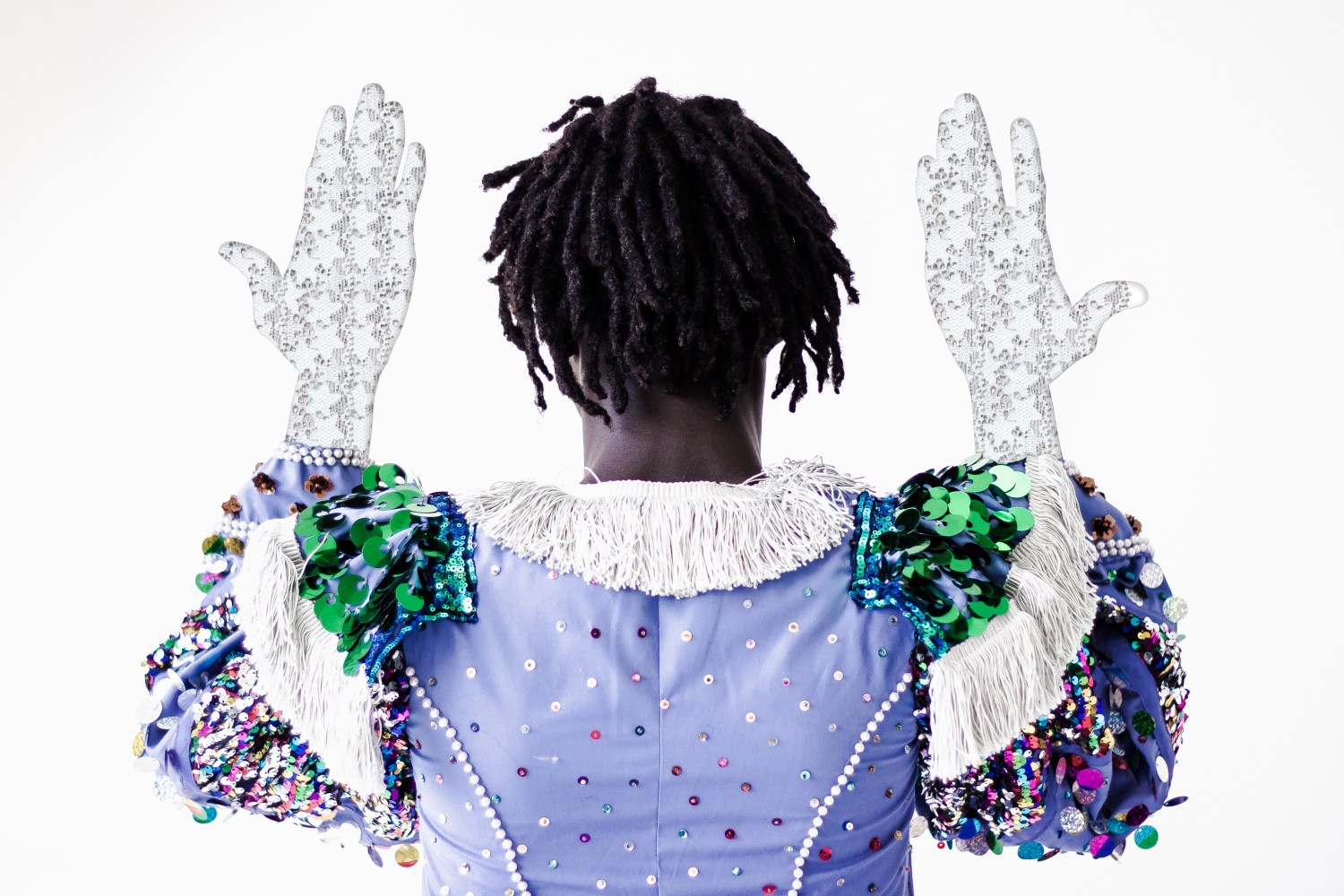
Haitian Creole Translation
Nan foto sa a, mwen ranplase men modèl la, yon senbòl atizan, aksyon, ak pwoteksyon, ak dantèl. Se lyen memwa ak eritaj ayisyen. Dizay se yon zak politik. Efò sa a se pou achive kreyasyon Michel Chataigne yo devan destriksyon k ap kontinye nan peyi nou, sitou apre dife ki te boule Hotel Oloffson, yon moniman ki te egziste pandan plizyè syèk. Nou kreye achiv pou istwa nou kapab dire pou jenerasyon kap vini yo.
October’s featured photographer is Zarita Zevallos
Zarita Zevallos is a Haitian photographer, conceptual artist, and architect based in Brooklyn, New York. Her practice merges hand editing and the superimposition of darker-skinned bodies with powerful materials such as thread, bullets, glass, and barbed wire. Through this process, she investigates themes of identity, gender roles, crimes committed by nations, non-conformism, and political or ideological authoritarianism.
Zevallos holds a bachelor’s degree in architecture from the City University of New York and a minor in Engineering from the Inter-American University in Puerto Rico. Her work has been exhibited at institutions including the Steven Kasher Gallery, Chashama galleries, Haiti Cultural Exchange, Photoville, the International Center of Photography, and the University of Illinois Chicago, among others.
Artist Statement
My work exists at the intersection of memory, resistance, and transformation. As an Architect, I am drawn to layering materials onto my photography to emphasize identity and concept. By doing so and superimposing images of darker-skinned bodies with elements such as thread, glass, barbed wire, and bullets, I create ruptures that reflect the violence, resilience, and complexity embedded in our lived experiences.
I am interested in how art can move beyond the walls of a gallery and serve as a catalyst for dialogue and change. My practice does not only aim to denounce or document, but to disrupt; to push against systems of oppression and provoke reflection.
For me, art is where imagination becomes a form of resistance.
Return To Ayiti: Michel Chataigne
This photo series adds and maintains the collective memory of the Haitian people. Through fashion: fabric and ritual, we remember who we are, where we come from and honor the Haitian icons who revealed who we are to the world.
At the heart of this project is the work of Michel Chataigne, one of Haiti’s most important fashion designers. He is a visionary whose designs have shaped Haitian identity, style, and presence on the global stage. In a country that too often fails to document the artists who break barriers, this series uses his garments not just as fashion, but as living archives. Each look is a testimony to his legacy; 40 years we will not forget.
We honor our people through makeup inspired by Taino and African traditions, and through the textures of home by using CMU blocks. Laces are sewn directly into the photographs, marking each portrait with the visual language of the everyday materials found in the memories of our Haitian upbringing.
This is not just about aesthetics; it is about preservation. As our people continue to face war and erasure, we respond with what we have: Some with oral history, some with fabric or art, and most with an unbreakable bond with their soil.



Caption photo 1
I question how materials hold immense power to embody an idea or a memory. What did I see as a child? What do I see as an adult? Lace has historically been associated with wealth, refinement, and “Sunday best”. In Haiti, it marks moments of pride, when people dress in their finest despite social, or economic differences.
By sewing lace into the photographs, I archive Michel Chataigne’s designs with my hopes for Haiti. As one would preserve an artifact in a museum, ensuring that these moments of beauty and dignity remain intact until we can recreate them again in physical space.
Haitian Creole Translation
Mwen poze kesyon kijan materyèl ka gen pouvwa reprezante yon lide oswa yon memwa. Kisa mwen te wè kòm timoun? Kisa mwen wè kounye a kòm yon granmoun? Dantèl te toujou asosye ak richès, rafinman, ak “rad dimanch”. An Ayiti, li make moman fyète, lè moun abiye nan pi bèl rad yo malgre diferans sosyal oswa ekonomik.
Lè m koud dantèl nan foto yo, mwen ap fè yon achiv ak rad Michel Chataigne yo ansanm ak rèv mwen pou Ayiti. Menm jan yon mize ki konsève zèv, pou asire moman bote ak diyite sa yo rete vivan jouk n ap ka kreye yo ankò nan espas fizik.
Caption photo 2
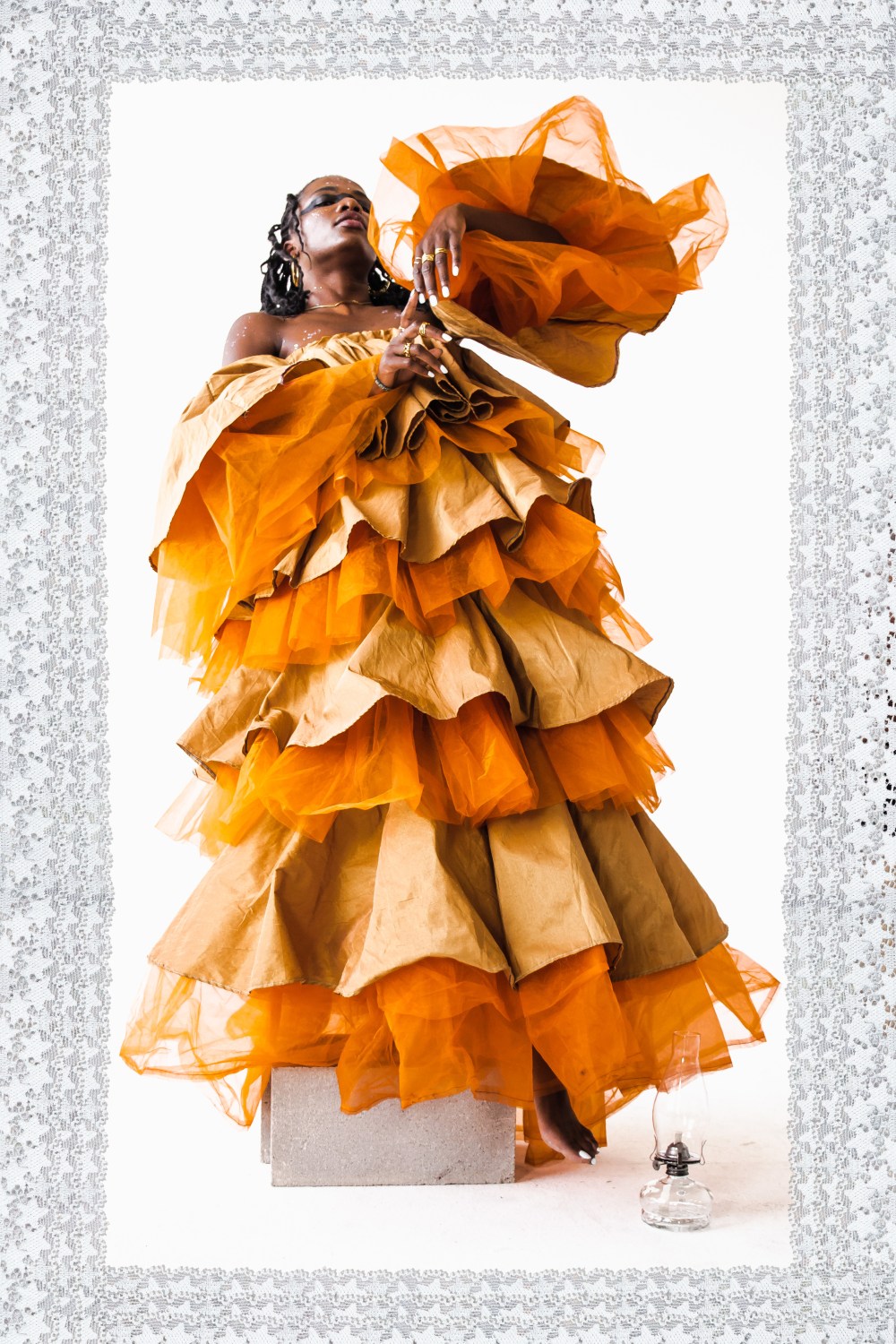
In Haiti, the CMU block is more than construction material; it is a seat, a stand for a radio, or a podium. Each block carries the improvisations of our streets. With a gas lamp at her feet, the model appears in a trance-like state, reflecting the otherworldly aspect of Michel Chataigne’s design. Hand-stitched lace around the photograph enhances the image by embedding memory into it; transforming the photograph into an archival object that preserves both the garment and the stories it carries.
Haitian Creole Translation
An Ayiti, blòk siman plis pase yon materyèl konstriksyon; li se yon chèz, yon tab pou radyo, oswa yon podyom. Chak blòk reprezante tout enprovisasyon ki genyen nan lari nou yo. Avèk yon lanp gaz bò pye li, modèl la parèt tankou nan yon eta trans, ki reflete on santiman mistik nan rad Michel Chataigne. Dantèl ki koud alantou foto a bay plis fòs, li ankre memwa nan li; li transfòme foto a an yon objè achiv ki konsève rad la ansanm ak istwa li pote yo.
Caption photo 3
Every designer brings a unique perspective, and each design reflects that worldview, shaping every aspect of their work. Michel Chataigne’s jacket captures the vibrant energy of Haiti’s street carnival. The model’s striking pose, paired with the design, preserves a vivid moment of movement and cultural expression. In this photograph, we see the spirit of a Bòkò, the energy of an Ougan; Haitian identity powerfully represented on a high-fashion, global stage.
Haitian Creole Translation
Chak designer pote yon vizyon inik, epi chak dizay reflete vizyon ki fòme aspè nan travay yo. Jakèt Michel Chataigne lan kaptire enèji vivan karnaval lari Ayiti a. Pòz pwisan modèl la, konsève yon moman vivan nan mouvman ak ekspresyon kiltirèl. Nan foto sa a, nou wè lespri yon Bòkò, enèji yon Ougan; idantite ayisyen parèt fò ak fyète sou yon sèn mondyal nan mòd wo nivo.
Caption photo 4
This one-of-a-kind wedding dress by Michel Chataigne, preserved for over 25 years, takes center stage in this photograph. The portrait honors Haitian heritage through makeup inspired by Taino and African traditions, while CMU blocks evoke the textures of home. Hand-sewn laces frame the image, turning everyday materials into a visual language that carries the stories and memories of our upbringing. Here, the CMU block becomes more than construction material; it serves as a stand, supporting and showcasing Haitian fashion.
Haitian Creole Translation
Ròb maryaj inik sa a, ki konsève plis pase 25 ane, vin tounen poto mitan nan foto sa a. Pòtrè a onore eritaj ayisyen atravè makiyaj ki enspire pa tradisyon Taino ak Afriken, pandan blòk siman yo raple teksti lakay nou. Dantèl koud ak men kontou foto a, transfòme materyèl chak jou yo an yon lang vizyèl ki pote istwa ak memwa nou. Nan foto sila, blòk siman a se plis pase yon materyèl konstriksyon; li sèvi kòm yon podyòm ki soutni e mete an valè mòd ayisyen.
Caption photo 5
This photograph highlights makeup inspired by Taino and African traditions, alongside the ethereal dress by Michel Chataigne. Hand-sewn lace wraps around and across the image, emphasizing symbols of class and fashion while remaining grounded in the textures of everyday Haitian life.
Haitian Creole Translation
Foto sa a mete an avan makiyaj ki enspire pa tradisyon Taino ak Afriken. Dantèl ki antoure foto a mete aksan sou senbòl klas ak mòd pandan li rete kole ak teksti lavi chak jou Ayisyen yo.
Caption photo 6
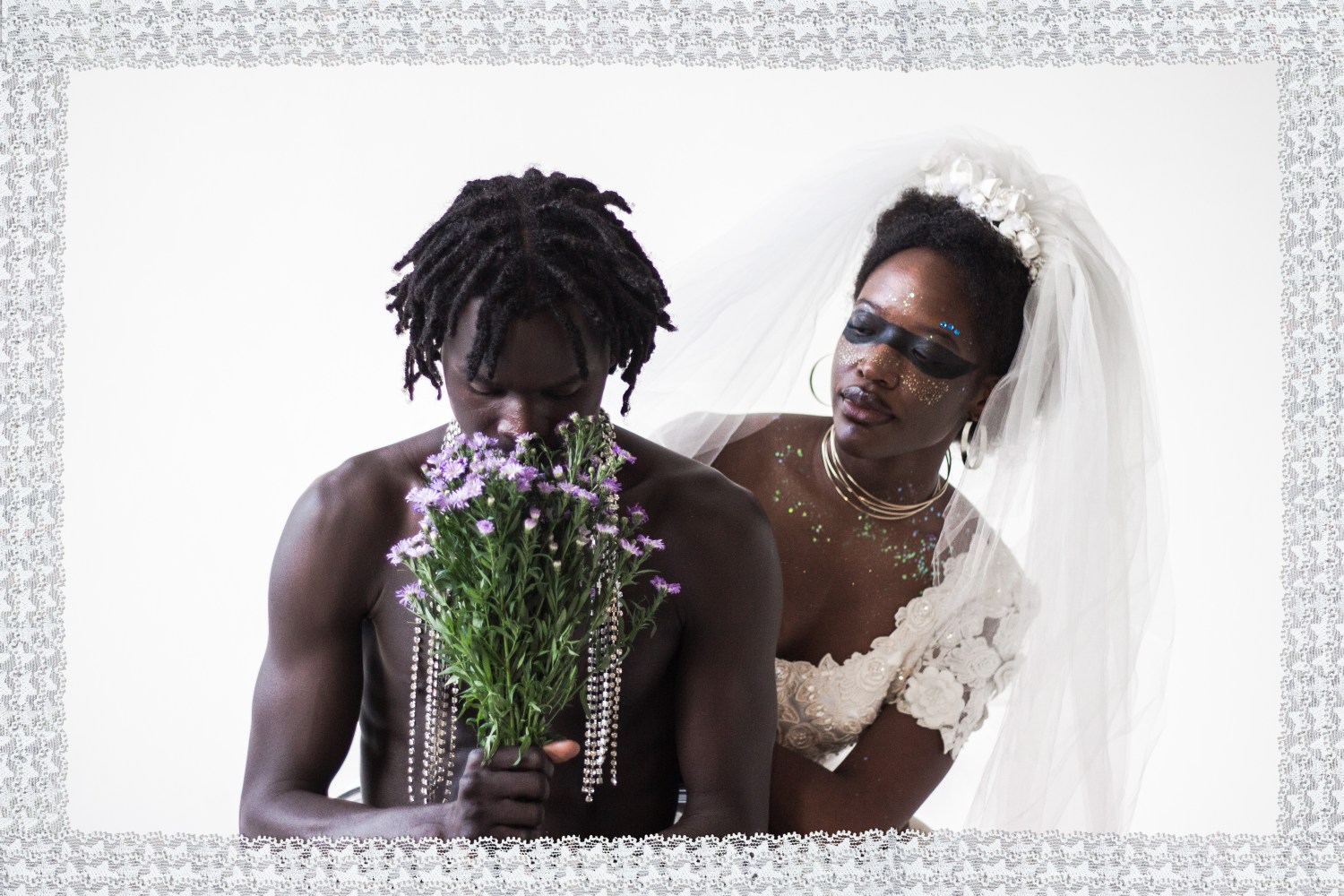
In this photograph, I aimed to capture the affection and care inherent in Haitian communities. Too often, media portrayals reduce Haitians to stereotypes, but growing up in Port-au-Prince until age 16, I witnessed the strength of community firsthand. People help, share, and care for one another. This portrait seeks to honor that spirit while highlighting the beauty of Michel Chataigne’s wedding dress, weaving together cultural memory and design.
Haitian Creole Translation
Nan foto sa a, mwen te vle kaptire afeksyon ak swen ki egziste nan kominote ayisyen yo. Twòp fwa, medya prezante Ayisyen kòm estereyotip, men lè m te grandi nan Pòtoprens jouk laj 16 an, mwen te temwen fòs kominote a dirèkteman. Moun ede youn lòt, yo pataje, yo pran swen. Pòtrè sa a vize onore lespri sa a pandan li mete an avan bote ròb maryaj Michel Chataigne lan, ki tise ansanm ak memwa kiltirèl ak dizay.
To see more of Zarita’s work, here.
 foto-feminas.com