
June’s featured photographer is Ana Lucia Galicia
Ana Lucia Galicia is a Guatemalan photographer, visual artist and independent bookseller. She mainly focuses on long-term projects that address issues of memory and family, as well as social issues of migration, identity and gender perspective that can generate conversation through the individual and collective. Her artistic work encompasses performance and research. Her photographic works have been exhibited collectively at Tandém Gallery, Mexico 2021, Indagarse, Lark Gallery, Guatemala 2021; in 2022 she was part of the Central American artists exhibition Rewriting us at Apexart, New York, also with her photographic series ‘Margarita’ she was part of the hybrid residency Mango Residency that ended with a physical and international exhibition at Casa de Arte Puertas Adentro, Punta del Este, Uruguay. In February 2022 she made her first performance ‘Justicia eficaz pero no para todas’ (Effective justice but not for all) as a critique of the inability of the public institution to respond to the complaints of women who are victims of violence.
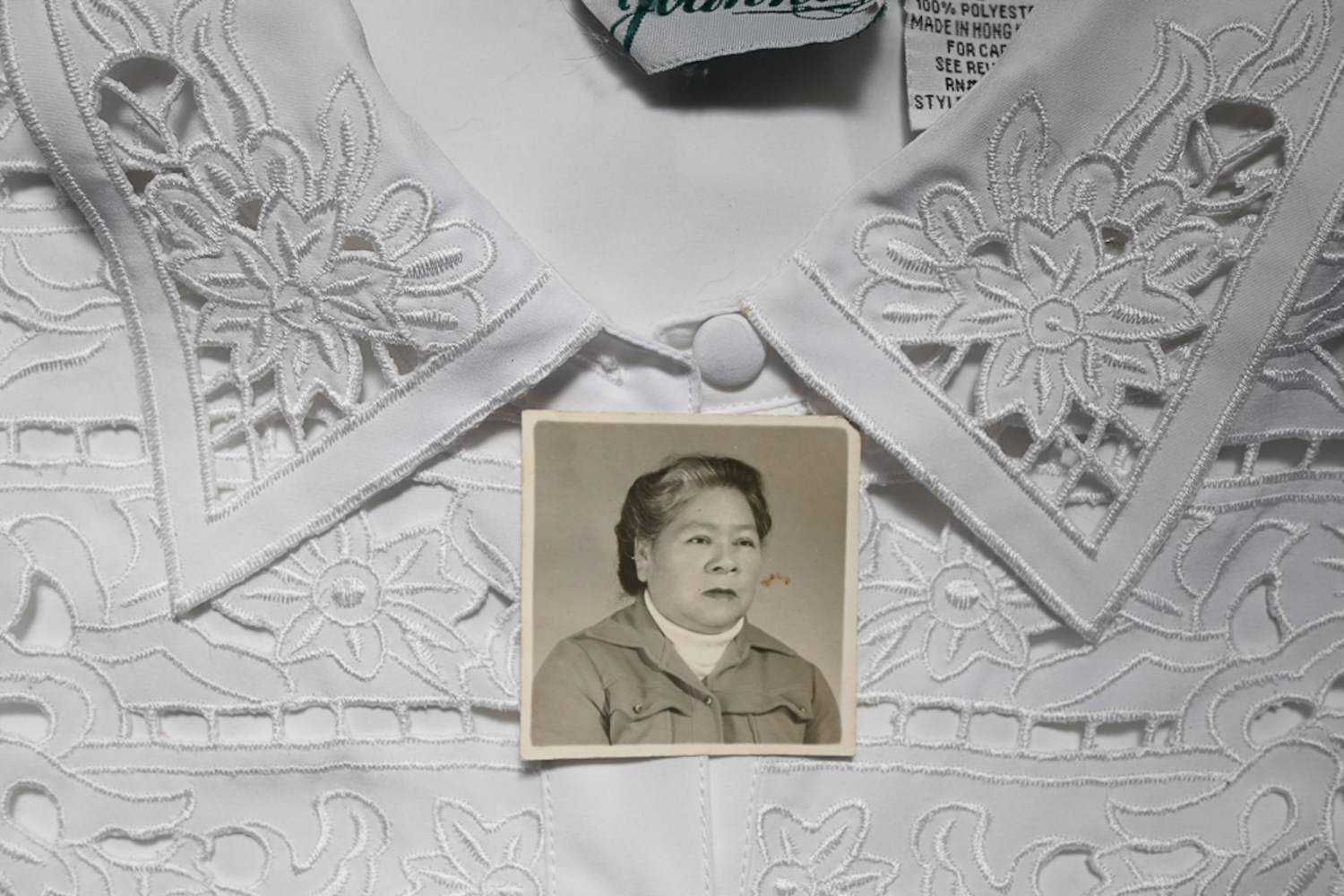
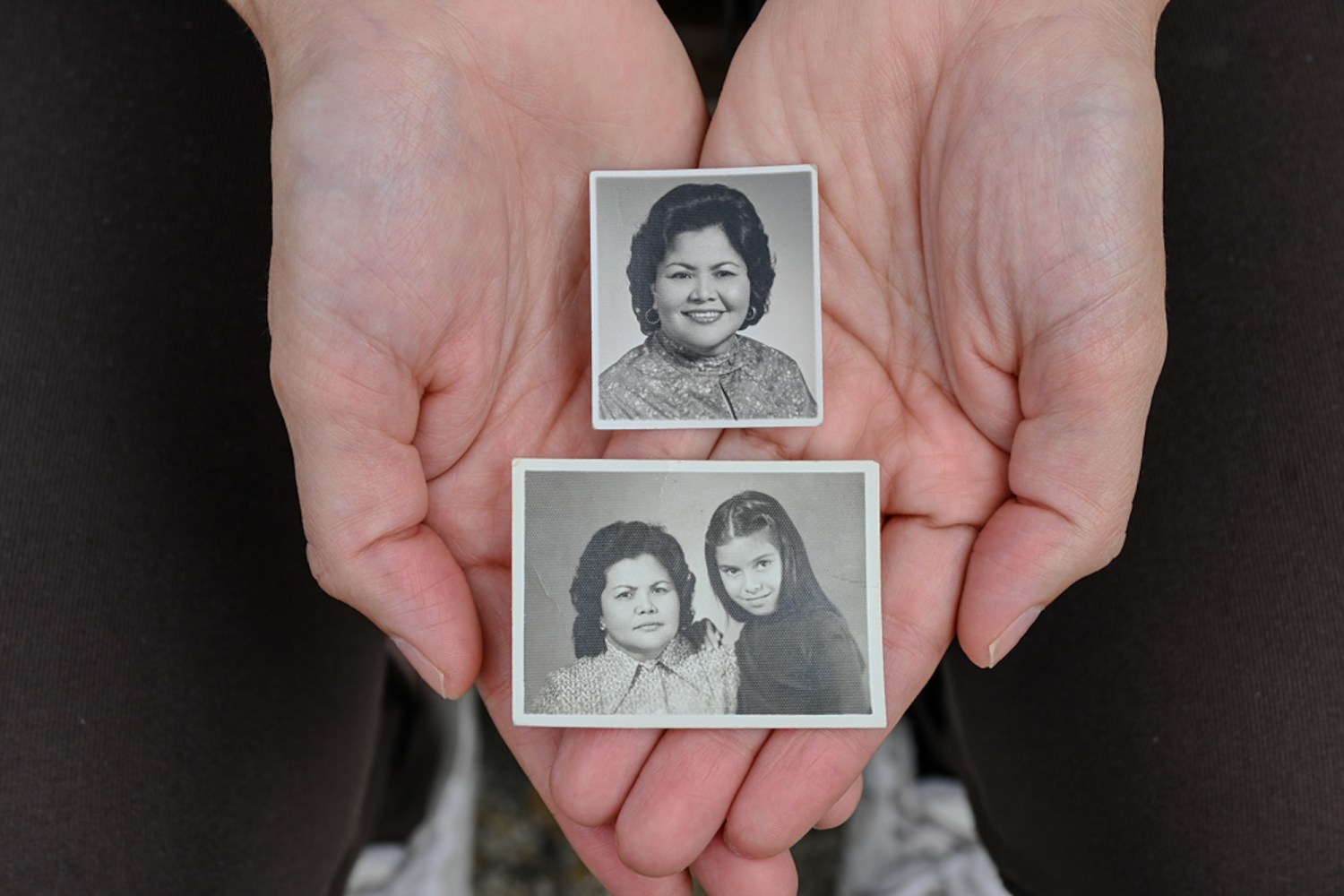
She is currently studying a Master’s degree in Hispanic American Literature at the Rafael Landívar University in Guatemala and is working on the collective photographic project ‘Pertenencias’ where she documents the testimonies of Guatemalan women who keep objects that belonged to their maternal and paternal grandmothers.
On how to care for the past (Sobre cómo cuidar el pasado)
Some of the objects that came to me after the death of my grandmother Margarita, made me question and reflect on the meaning of objects and their relationship with the people who own them. Going through and emptying her drawers was another way to get closer to her. What objects and photos she kept, what memories were contained in them, why she treasured them, what she wrote in her notebooks, what I would decide to keep. This photographic project is an attempt to give a name to those links we created.
One of the first aspects of the objects is their deep relationship with the one who uses them. In them we see the marks of their character, of their tastes, of their style. Objects acquire, so to speak, a personality derived from someone’s existence. In some cases, it is enough to see certain objects in a space to confirm the presence of that person. And although there may be objects that are the same, each of them takes on traits of the one who owns them, the objects receive a sign of identity. In this same sense, objects become an extension of people. Like identification documents, objects become proof of a person’s existence.
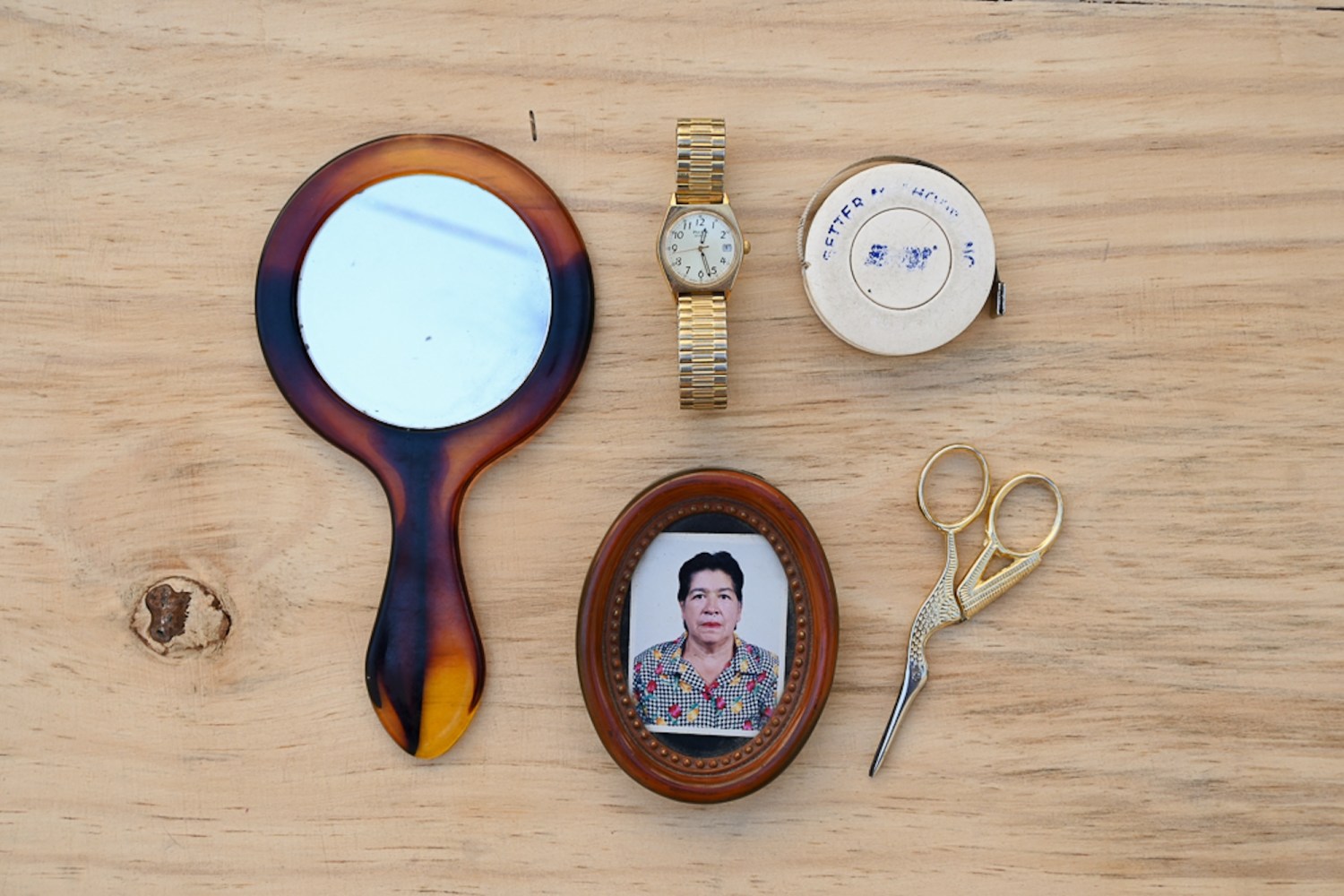
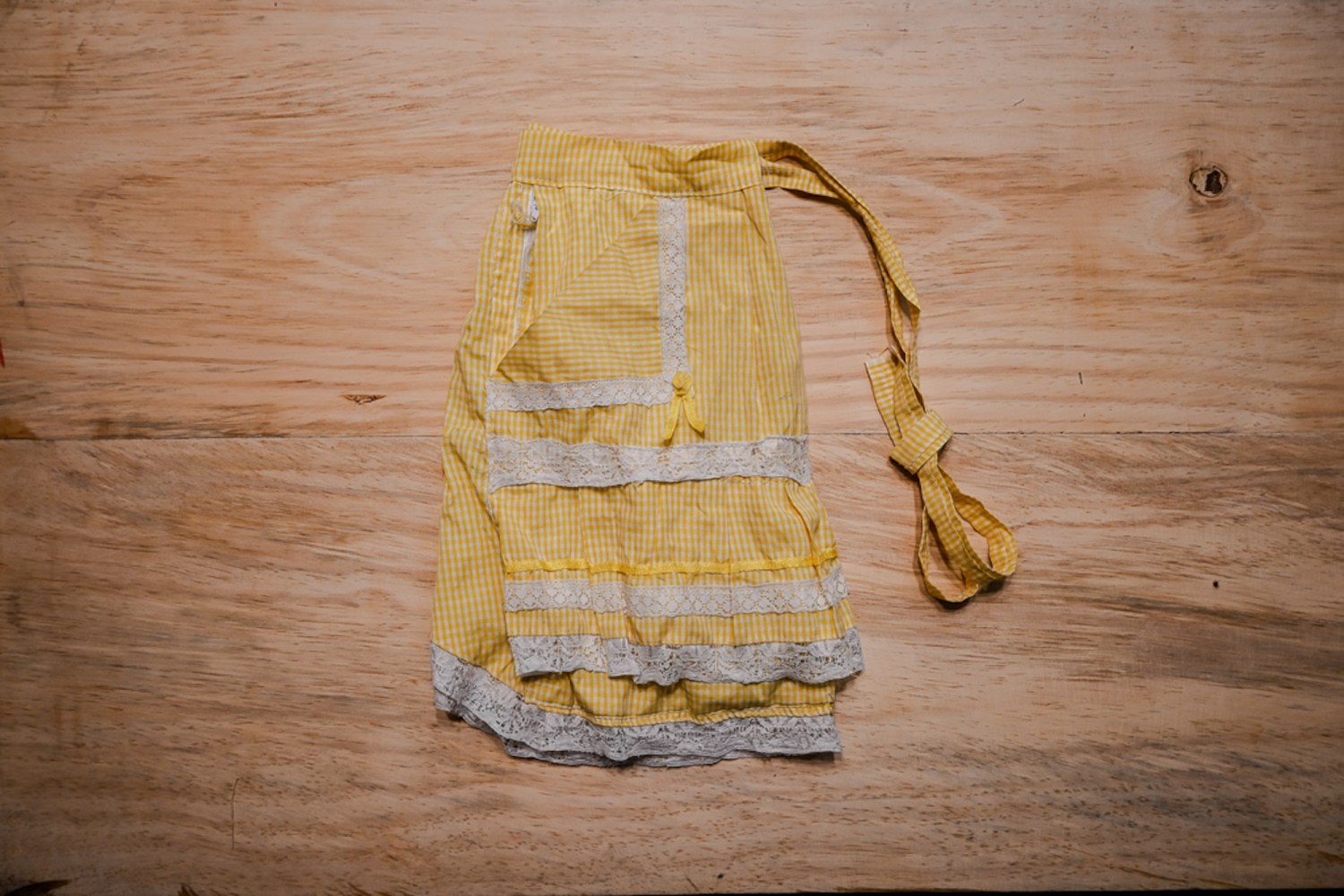
I keep my grandmother’s gabachas, the ones she used every day. Her sewing machine where so many times she adjusted a piece of clothing, sewed the sashes for my brother or lowered the hem of my school skirt. Her scissors, ruler, threads, pens, comb, candles that she never lit again, images of saints that can be found in any bookstore, church atrium or market but do not have the same sentimental value for the simple fact that they did not belong to my grandmother. The object takes value when it comes to belong to someone we love. They themselves are containers of memory.
I did not know any of the grandmothers presented here in life, but their granddaughters, who inherited their memories, customs and even their names, told me through objects about their personalities, dreams, life stories and character, as well as their grief, migrations and losses. The voice of the granddaughters is the prolongation of a memory.
In each documentation it was necessary to dig through papers, boxes, trunks and albums to relive memories. When we are asked to remember, we are asked to make “memory” and Mario Montabeltti (Peru, 1953) mentions that we make memory in the same way we make a house. We adapt what we remember to our needs and desires. Perhaps that is why we keep certain objects, because they are the ones that contribute to the construction and preservation of our house-memory.
To thread my personal mourning with the collective history has been to ask myself from what places of our memory we remember and through what. Belongings is a way of perpetuating a love that I do not want to give up yet.


To see more of Ana Lucía’s work, here.
La fotógrafa del mes de junio es Ana Lucia Galicia
Ana Lucia Galicia es una fotógrafa, artista visual y librera independiente guatemalteca. Principalmente se enfoca en proyectos a largo plazo que abordan temas sobre memoria y familia, así como temas sociales sobre migración, identidad y perspectiva de género que puedan generar conversación a través de lo individual y colectivo. Su trabajo artístico abarca el performance y la investigación. Sus trabajos fotográficos han sido expuestos de forma colectiva en Galería Tandém, México 2021, Indagarse, Galería Lark, Guatemala 2021; en 2022 formó parte de la exposición de artistas centroamericanas Rewriting us en Apexart, New York, además con su serie fotográfica ‘Margarita’ fue parte de la residencia híbrida Mango Residencia que finalizó con una exposición física e internacional en Casa de Arte Puertas Adentro, Punta del Este, Uruguay. En febrero de 2022 realiza su primer performance ‘Justicia eficaz pero no para todas’ como crítica a la incapacidad de la institución pública para dar respuesta a las denuncias de las mujeres que son víctimas de violencia.
Actualmente estudia la Maestría en Literatura Hispanoamericana en la Universidad Rafael Landívar de Guatemala y trabaja en el proyecto fotográfico colectivo ‘Pertenencias’ donde documenta los testimonios de mujeres guatemaltecas que conservan objetos que pertenecieron a sus abuelas maternas y paternas.
Instrucciones para cuidar el pasado
En mis sueños aparece de nuevo
tapizado de amarillo el patio inmenso
y recuerdo a mi abuela enseñándome a barrer
en los veranos incomprensibles de ternura.
Genealogías de Carlos Gerardo Orellano
Algunos de los objetos que llegaron a mí luego de la muerte de mi abuela Margarita, me hicieron cuestionarme y reflexionar sobre el significado de los objetos y su relación con las personas que los poseen. Revisar y vaciar sus cajones fue otra manera de acercarme a ella. Qué objetos y fotos guardaba, qué recuerdos estaban contenidos en ellos, por qué los atesoraba, qué escribía en sus libretas, qué era lo que yo decidiría conservar. Este proyecto fotográfico es un intento por darle un nombre a esos vínculos que creamos.
Uno de los primeros aspectos de los objetos es su relación profunda con quien los usa. En ellos se ven las marcas de su carácter, de sus gustos, de su estilo en particular. Los objetos adquieren, por así decirlo, una personalidad derivada de la existencia de alguien. En algunos casos, basta con ver determinados objetos en un espacio para confirmar la presencia de esa persona. Y aunque pueden haber objetos iguales, cada uno de ellos toman rasgos de quien los posee, los objetos reciben una seña de identidad. En este mismo sentido, los objetos se convierten en una extensión de las personas. Como los documentos de identificación, los objetos se convierten en la prueba de la existencia de una persona.
Yo conservo las gabachas de mi abuela, las que usaba todos los días. Su máquina de coser donde tantas veces ajustó una prenda de ropa, cosió las fajuelas para mi hermano o le bajó el ruedo a mi falda escolar. Sus tijeras, metro, hilos, lapiceros, peine, veladoras que nunca más encendió, imágenes de santos que pueden encontrarse en cualquier librería, atrio de iglesia o mercado pero que no tienen el mismo valor sentimental por el simple hecho de que no pertenecieron a mi abuela. El objeto toma valor cuando llega a pertenecer a alguien a quien amamos. Ellos mismos son contenedores de memoria.
No conocí en vida a ninguna de las abuelas que están presentadas aquí pero sus nietas, quienes heredaron sus recuerdos, costumbres e incluso sus nombres, me contaron a través de objetos sobre su personalidad, sueños, historias de vida y carácter, también sobre sus duelos, migraciones y pérdidas. La voz de las nietas es la prolongación de una memoria.
En cada documentación fue necesario excavar a través de papeles, cajas, baúles y álbumes para revivir recuerdos. Cuando se nos pide recordar, se nos pide hacer “memoria” y Mario Montabeltti (Perú, 1953) menciona que hacemos memoria de la misma manera en que hacemos una casa. Acomodamos lo que recordamos a nuestras necesidades y deseos. Tal vez por eso conservamos determinados objetos, porque son estos mismos los que contribuyen a la construcción y conservación de nuestra casa-memoria.
Hilvanar mi duelo personal con la historia colectiva ha sido preguntarme desde qué lugares de nuestra memoria recordamos y a través de qué. Pertenencias es una forma de perpetuar un amor al cual no quiero renunciar aún.
Para ver más de los trabajos de Ana Lucía, aquí.
 foto-feminas.com